
Below is the complete list of J.R.R. Tolkien books in order. For each series, the chronological reading order is the same as the order of publication.
Publication Order of History Of The Lord Of The Rings Collections Books


Publication Order of Later Silmarillion Collections Books
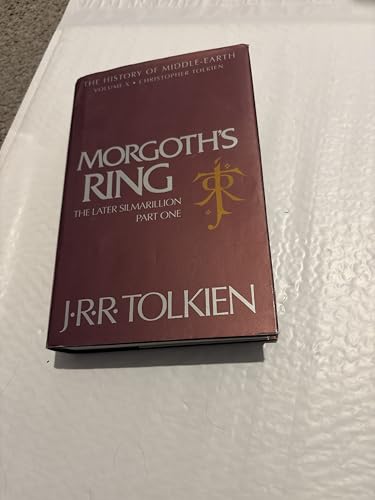
Publication Order of Middle-Earth Universe Books

- Realms of Tolkien: Images of Middle-Earth (1996)
Published in 1996, Realms of Tolkien: Images of Middle-Earth is listed as book #2 in the Middle-Earth Universe series. 
Publication Order of Tales of Middle Earth Books

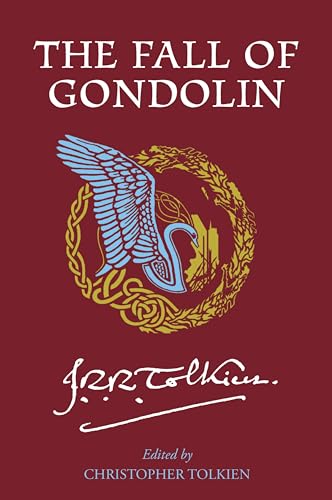

Publication Order of The History of Middle-Earth Books
with Christopher Tolkien


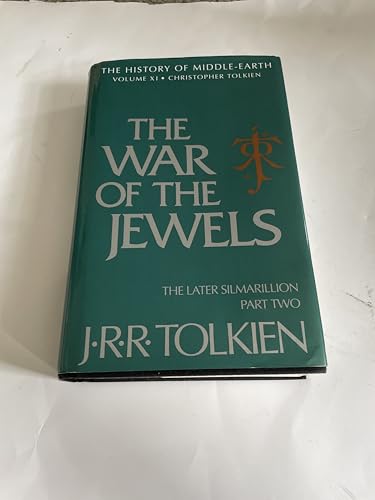


Publication Order of The Lord of the Rings Books


Publication Order of Standalone Books


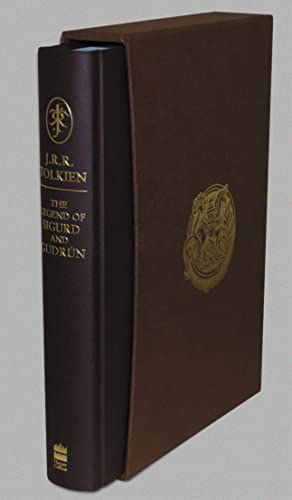


Publication Order of Short Stories/Novellas Books
- Leaf by Niggle (1945)
Leaf by Niggle was published in 1945 and is listed as book #1 in the Short Stories/Novellas series. 
Publication Order of Short Story Collections Books


Publication Order of Collections Books

Publication Order of Poetry Collections Books

Publication Order of Non-Fiction Books




Publication Order of Children’s Books

About J.R.R. Tolkien
J.R.R. Tolkien was an English writer, philologist, poet, and university professor whose creation of Middle-earth transformed modern fantasy literature. Born John Ronald Reuel Tolkien in Bloemfontein, Orange Free State, in 1892, he spent most of his childhood and adult life in England. His scholarly fascination with languages, mythology, medieval literature, and the histories concealed within words became inseparable from his fiction. Rather than inventing Middle-earth simply as a setting for adventure, Tolkien developed languages, genealogies, legends, calendars, cultures, and thousands of years of imagined history, creating what he described as a mythology or “legendarium.”
Tolkien lost both parents while still young and eventually came under the guardianship of Catholic priest Francis Morgan. He studied at Exeter College, Oxford, initially concentrating on classics before turning toward English language and literature. During the First World War he served as an officer with the Lancashire Fusiliers and fought in the Battle of the Somme. Illness removed him from active combat, while several close friends were killed during the war. Although Tolkien rejected simplistic interpretations of his fiction as direct allegory, experiences of war, loss, industrial destruction, fellowship, and endurance inevitably belonged to the world in which his imagination developed.
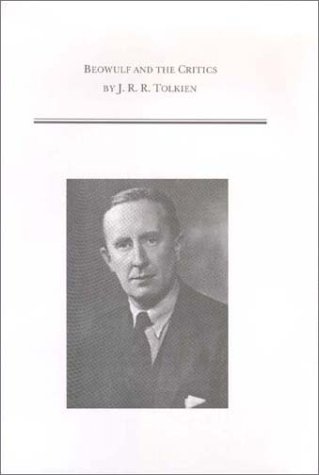
After the war, Tolkien worked briefly on the Oxford English Dictionary before pursuing an academic career. He taught at the University of Leeds and returned to Oxford in 1925 as Rawlinson and Bosworth Professor of Anglo-Saxon. He later became Merton Professor of English Language and Literature. His scholarship specialized in Old and Middle English, with Beowulf holding particular importance. His influential lecture “Beowulf: The Monsters and the Critics” helped reshape scholarly appreciation of the poem as literature rather than merely a historical source.
Tolkien had been creating invented languages and mythological stories long before his best-known novels appeared. The Hobbit, published in 1937, grew from a story he told his children and introduced Bilbo Baggins, Gandalf, Gollum, and the One Ring. Its success led his publisher to request another story involving hobbits. The project became far larger and darker than its predecessor, eventually producing The Lord of the Rings, published in three volumes between 1954 and 1955.
Although The Hobbit and The Lord of the Rings became Tolkien’s most widely read books, they represent only a small portion of the history he imagined for Middle-earth. For decades he worked on stories concerning the First Age, including the creation of the world, the Silmarils, the wars against Morgoth, and figures such as Beren, Lúthien, Túrin Turambar, and the rulers of the great Elven kingdoms. He never completed this mythology in a form he considered ready for publication.
After Tolkien’s death in 1973, his son Christopher Tolkien undertook the enormous task of organizing and editing his father’s manuscripts. The Silmarillion appeared in 1977, followed by Unfinished Tales and the twelve-volume History of Middle-earth. Later publications including The Children of Húrin, Beren and Lúthien, and The Fall of Gondolin presented major narratives from the legendarium in forms assembled from Tolkien’s surviving texts.
Tolkien was also part of the Inklings, the informal Oxford literary circle that included his close friend C.S. Lewis. Beyond Middle-earth, he wrote works such as Farmer Giles of Ham, Leaf by Niggle, and Smith of Wootton Major, as well as poetry and scholarly essays. His bibliography ultimately reflects the unusual union of storyteller and philologist: Tolkien did not merely write adventures in an invented land, but spent a lifetime constructing the languages, legends, and historical memory that made that land feel as though it had existed long before the reader arrived.