
Below is the complete list of Edna O’Brien books in order. For each series, the chronological reading order is the same as the order of publication.
Publication Order of The Country Girls Trilogy Books


Publication Order of Standalone Books




Publication Order of Collections Books




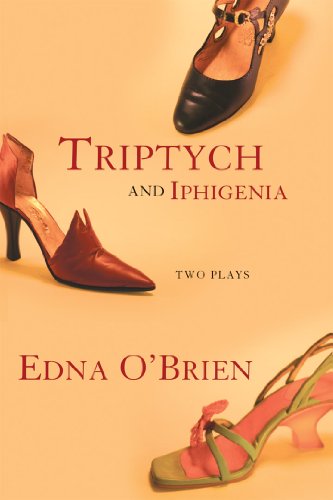

Publication Order of Plays Books

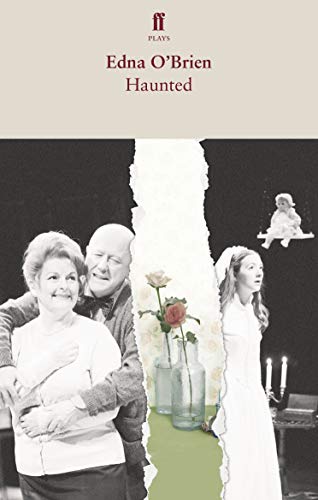
Publication Order of Picture Books

Publication Order of Short Stories/Novellas Books


Publication Order of Non-Fiction Books


Publication Order of Faber Stories Books

Publication Order of Selected Shorts Books

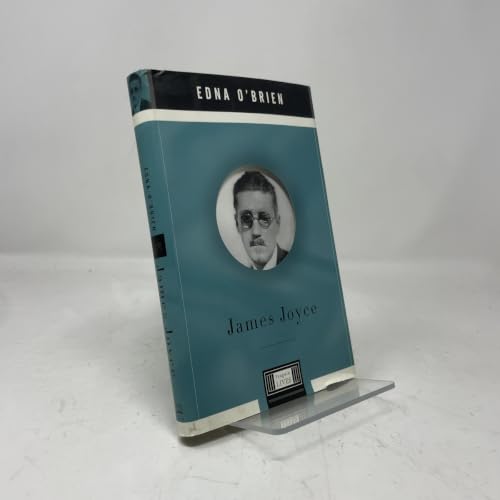
Publication Order of Penguin Lives Books









About Edna O’Brien
Edna O’Brien was an Irish novelist, short-story writer, playwright, memoirist, and essayist whose frank depiction of women’s inner lives helped transform modern Irish literature. Beginning with The Country Girls in 1960, she wrote about female desire, restrictive religion, marriage, exile, loneliness, sexuality, and the emotional consequences of growing up in a society governed by rigid expectations. Her early work provoked outrage and censorship in Ireland, yet the qualities that made it controversial also established O’Brien as an important literary voice whose influence extended far beyond her native country.
Born in County Clare in 1930, O’Brien grew up in a rural Catholic household and was educated by nuns before studying pharmacy in Dublin. She qualified as a pharmacist but increasingly gravitated toward literature. After marrying writer Ernest Gébler, she moved with him to London, where the couple raised two sons. The marriage eventually ended, and London remained O’Brien’s home for much of the rest of her life.
Her extraordinary breakthrough came with her first novel, The Country Girls, written quickly after she was commissioned to produce a novel. Through the friendship of Caithleen “Kate” Brady and Baba Brennan, O’Brien depicted young Irish women moving from rural constraint toward Dublin and the possibility of independence. The book was banned in Ireland, as were several of her subsequent works, and copies were publicly burned in her home region.
O’Brien continued Kate and Baba’s story in The Lonely Girl and Girls in Their Married Bliss. Together, the Country Girls trilogy charts the women’s movement from adolescence into relationships, marriage, motherhood, and disillusionment. Its candor about female sexuality and dissatisfaction was especially provocative in early-1960s Ireland, but its lasting significance lies equally in O’Brien’s ability to capture intimacy between women and the psychological effects of social repression.
She resisted being defined solely by those early novels. Books including August Is a Wicked Month, Casualties of Peace, Night, and The High Road pushed her fiction into different emotional and formal territory, while numerous short stories further established her command of compressed, lyrical storytelling.
Later in life, O’Brien increasingly confronted political violence. House of Splendid Isolation considers the conflict in Northern Ireland through an encounter between an elderly woman and an IRA gunman. Down by the River drew on a highly controversial Irish abortion case, while In the Forest reimagined the circumstances surrounding a notorious triple murder in rural Ireland. The Little Red Chairs brought the legacy of the Bosnian War into an Irish village through a charismatic war criminal living under an assumed identity.
Her final novel, Girl, published in 2019, entered another difficult historical reality through the fictional testimony of a Nigerian girl abducted by Boko Haram. The novel won the Kerry Group Irish Novel of the Year Award.
O’Brien also wrote plays, nonfiction, a short biography of James Joyce, and the memoir Country Girl. Her many honors included the Irish PEN Lifetime Achievement Award, the PEN/Nabokov Award, the David Cohen Prize for Literature, and appointment as an honorary Dame Commander of the Order of the British Empire.
Edna O’Brien died in London on July 27, 2024, aged ninety-three. Across more than twenty works of fiction, she repeatedly gave language to experiences that respectable society preferred to leave unspoken. Her career consequently traces not only one writer’s development, but an enormous shift in what Irish women could say openly about desire, power, faith, violence, and their own lives.