
Below is the complete list of Dorothy Gilman books in order. For each series, the chronological reading order is the same as the order of publication.
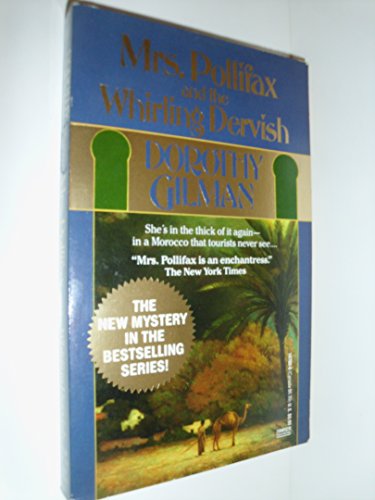
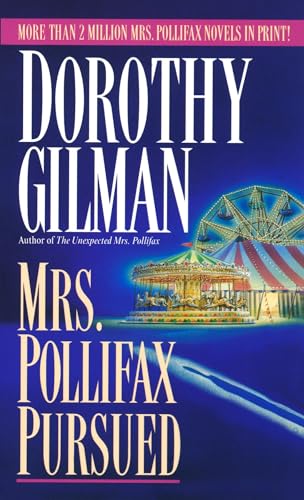
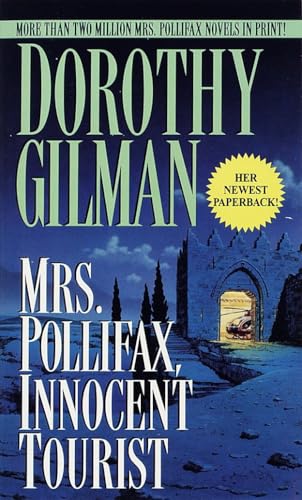
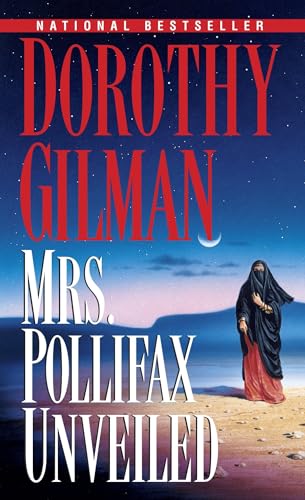
Publication Order of Mrs. Pollifax Books




Publication Order of Madame Karitska Books


Publication Order of Standalone Books











Publication Order of Non-Fiction Books
About Dorothy Gilman
Dorothy Gilman was an American novelist best known for creating Emily Pollifax, the seemingly ordinary New Jersey grandmother who becomes an unlikely CIA operative and travels the world on increasingly dangerous assignments. Her fiction occupies an unusual space between mystery, espionage, adventure, and character comedy, replacing the hard-edged professional spy with protagonists who succeed through curiosity, intuition, empathy, and an ability to notice people others underestimate. The Mrs. Pollifax novels became the defining achievement of a career that also included children’s fiction, young adult novels, standalone mysteries, fantasy, and memoir.
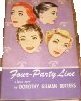
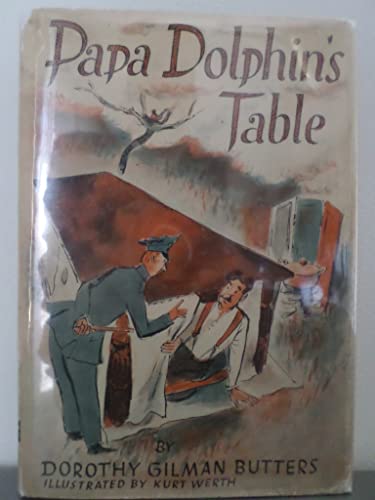
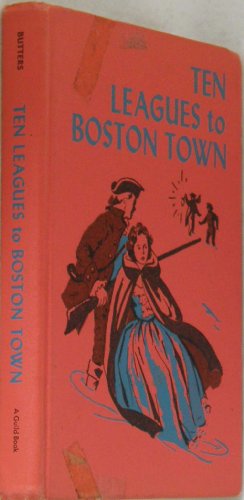
Born Dorothy Edith Gilman in New Brunswick, New Jersey, in 1923, she developed an interest in both writing and art while young. She studied at the Pennsylvania Academy of the Fine Arts and initially expected that illustration and children’s books would form the basis of her career. After marrying Edgar Butters, she published early juvenile fiction under the name Dorothy Gilman Butters, beginning in the late 1940s. Her books for younger readers ranged across contemporary stories, historical fiction, and adventure before she shifted toward adult novels during the 1960s.
That transition produced The Unexpected Mrs. Pollifax in 1966. Emily Pollifax enters the novel as a widowed grandmother dissatisfied with the limited life she believes remains available to her. Acting on a long-held fantasy, she approaches the CIA hoping to become a spy and is accidentally recruited for what should be a simple courier assignment. The resulting adventure established the central joke of the series—professional enemies repeatedly underestimate a middle-aged woman with a garden-club background—but Gilman gave the premise enough seriousness and emotional substance for Mrs. Pollifax to become more than a comic novelty.
Fourteen Mrs. Pollifax novels eventually followed her through assignments involving Cold War intrigue, political instability, smuggling, kidnappings, assassins, and intelligence operations in locations across Europe, Asia, Africa, and the Middle East. Carstairs, her CIA contact, and recurring allies such as John Sebastian Farrell create continuity, while Mrs. Pollifax herself develops from an inexperienced volunteer into an unexpectedly capable operative. The international settings also reflected Gilman’s own extensive travels and gave the series an adventurous scope uncommon in cozy mysteries.
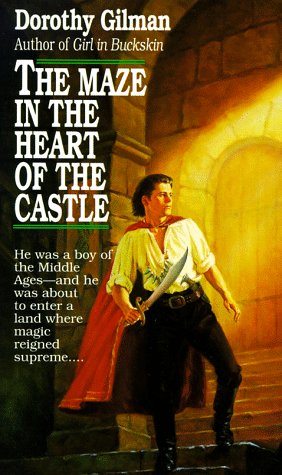
Gilman’s work outside Mrs. Pollifax shows that her fascination with unconventional protagonists was considerably broader. The Clairvoyant Countess introduced Madame Karitska, a psychic whose insight into people draws her toward mysteries, and Gilman later returned to the character in Kaleidoscope. Standalones such as A Nun in the Closet, The Tightrope Walker, Caravan, and Thale’s Folly move through mystery, suspense, spirituality, and personal reinvention without reproducing the Pollifax formula.
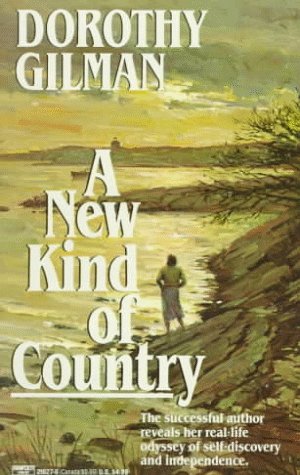
She also wrote A New Kind of Country, reflecting on a period of rural life in Nova Scotia. Interests in travel, self-sufficiency, herbs, and unconventional ways of living filtered naturally into several of her novels, reinforcing a recurring belief that people can discover unexpected reserves of courage when removed from familiar routines.
In 2010, the Mystery Writers of America named Gilman a Grand Master, recognizing her lifetime contribution to mystery writing. She died in 2012 at the age of eighty-eight.
Across her bibliography, Gilman repeatedly challenged assumptions about who gets to be adventurous. Her most memorable characters are rarely conventional action heroes; they are older women, outsiders, eccentrics, and apparently ordinary people whose intelligence becomes visible only when circumstances demand it. That humane, lightly humorous approach remains the quality that most clearly distinguishes her work.