
Below is the complete list of Ken Follett books in order. For each series, the chronological reading order is the same as the order of publication.
Publication Order of Apples Carstairs Books
as Simon Myles


- The Big Hit (1975)
The Big Hit is a 1975 release and appears as book #3 in the Apples Carstairs series.
Publication Order of Piers Roper Books


Publication Order of Kingsbridge Books


Publication Order of Century Trilogy Books


Publication Order of Standalone Books




Publication Order of Non-Fiction Books


- Bad Faith (2017)
Bad Faith is a 2017 release and appears as book #3 in the Non-Fiction series. 
About Ken Follett
Ken Follett is a Welsh novelist whose career spans espionage thrillers, historical epics, family sagas, and large-scale narratives built around periods of political and social upheaval. Born in Cardiff in 1949, he studied philosophy at University College London before working as a journalist and later in publishing. That professional path preceded a literary career that has grown to encompass dozens of books and worldwide sales approaching 200 million copies, making him one of the most internationally successful British popular novelists of his generation.
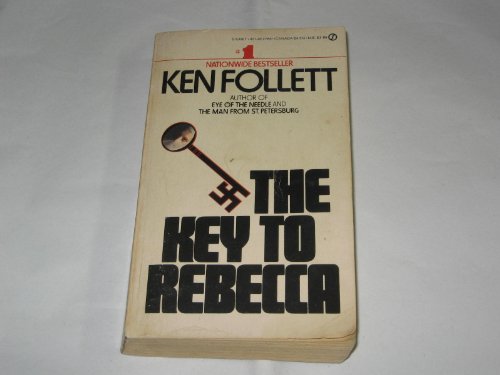
Follett’s decisive breakthrough came with Eye of the Needle, published in 1978. The Second World War spy thriller established many of the strengths that would remain visible throughout his fiction: carefully engineered suspense, high personal stakes, competing loyalties, and characters whose private decisions intersect with larger historical events. He followed that success with prominent thrillers including Triple and The Key to Rebecca, consolidating a reputation for narratives driven by pursuit, secrecy, danger, and international conflict.
The major transformation in Follett’s career arrived with The Pillars of the Earth in 1989. Centered on the building of a cathedral in medieval England, the novel moved far beyond the concentrated machinery of the conventional spy thriller. Follett used a broad cast and an extended historical canvas to explore ambition, faith, power, craftsmanship, violence, and social change. The book became his most famous work and eventually the foundation of the Kingsbridge series, which later expanded across different eras rather than following one continuous generation of protagonists.
That structure is important to understanding Follett’s bibliography. The Kingsbridge novels are connected principally through place, historical development, and recurring concerns about institutions and communities. World Without End, A Column of Fire, The Evening and the Morning, and The Armour of Light extend the world across widely separated periods, allowing Kingsbridge itself to function as a long-lived center of conflict and transformation. The result is less a conventional sequence built around one hero than a historical continuum in which successive societies confront changing forms of political, religious, economic, and technological pressure.
Follett pursued a different kind of scale in the Century Trilogy. Beginning with Fall of Giants and continuing through Winter of the World and Edge of Eternity, the trilogy follows interconnected families through major twentieth-century events. Here, continuity matters more directly: characters, descendants, and family relationships carry the narrative across generations, while wars, revolutions, ideological struggles, and social movements reshape their lives. The trilogy demonstrates Follett’s characteristic method of making vast historical developments legible through individual experience rather than treating history as detached background.
Across both thrillers and historical fiction, Follett is fundamentally a narrative architect. His novels tend to emphasize momentum, sharply defined conflicts, multiple viewpoints, and the gradual convergence of separate storylines. Even at epic length, his fiction is designed around pressure: people build, scheme, compete, survive, betray, cooperate, and adapt within systems larger than themselves. His background in thrillers remains evident in the pacing of the historical novels, while the historical fiction reveals an enduring interest in how power operates through governments, churches, families, wealth, war, and social institutions.
Follett’s books are therefore best understood not as one uniform body of work but as several distinct phases and modes. The early thrillers show the suspense writer at his most concentrated; Kingsbridge represents his expansive historical imagination; and the Century Trilogy applies the multigenerational saga to modern political history. That range explains why readers can enter his work from very different directions while still encountering the same underlying strengths: intricate construction, accessible storytelling, large consequences, and ordinary human ambitions placed against extraordinary events.