
Below is the complete list of Winston Graham books in order. For each series, the chronological reading order is the same as the order of publication.
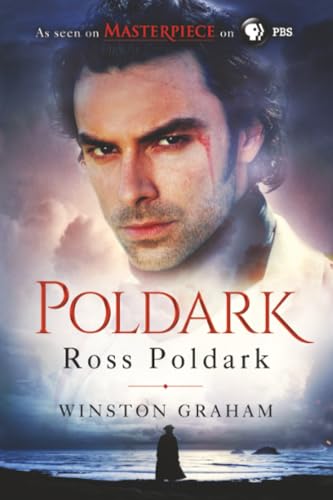
Publication Order of The Poldark Saga Books




Publication Order of Standalone Books
- Keys of Chance (1934)
Published in 1934, Keys of Chance is listed as book #2 in the Standalone series. 

- Without Motive (1936)
Without Motive was first published in 1936; within the Standalone series, it is listed as book #5. - The Dangerous Pawn (1937)
The Dangerous Pawn was published in 1937 and is listed as book #6 in the Standalone series. 
- Strangers Meeting (1939)
Strangers Meeting is a 1939 release and appears as book #8 in the Standalone series. - No Exit (1940)
In the Standalone series, No Exit is book #9 and was published in 1940. 



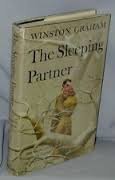





Publication Order of Short Story Collections Books

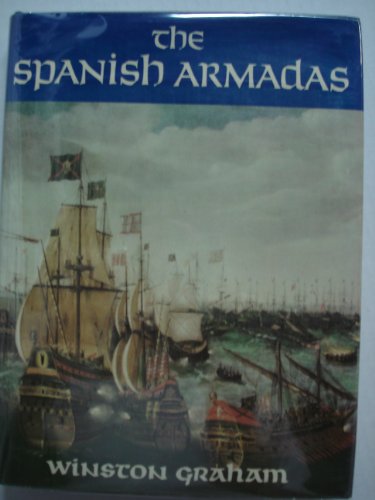
Publication Order of Non-Fiction Books

About Winston Graham
Winston Graham was an English novelist best known for creating the Poldark saga, though his career extended far beyond historical fiction into psychological suspense, crime, contemporary drama, short stories, screenwriting, and nonfiction. Born in Manchester in 1908, he moved with his family to Perranporth, Cornwall, as a teenager. Cornwall became the landscape most closely associated with his writing, supplying not only the setting for Poldark but also the social history, mining culture, coastline, and communities that gave the novels much of their character.
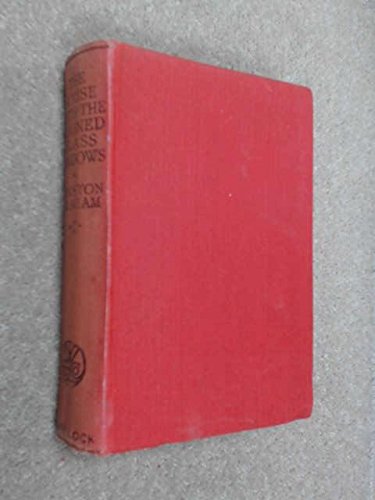
Graham wanted to write from an early age and spent years producing novels before finding a substantial readership. His first published book, The House with the Stained Glass Windows, appeared in 1934. During the Second World War he served with the Auxiliary Coastguard, but otherwise writing became his principal profession. His early fiction leaned heavily toward thrillers and suspense, and even after Poldark made his name, Graham continued moving between historical and contemporary subjects rather than allowing one successful series to define everything he wrote.
Ross Poldark, published in 1945, introduced the Cornish landowner returning home after the American Revolutionary War and began the work for which Graham remains most famous. Demelza, Jeremy Poldark, and Warleggan followed, establishing a family saga shaped by love, class divisions, mining, banking, politics, poverty, and rivalry. Graham then left the series for two decades before returning with The Black Moon in 1973. He ultimately completed twelve Poldark novels, with Bella Poldark appearing in 2002, nearly sixty years after Ross first entered print.
The long gap within Poldark reflects the breadth of Graham’s other work. He wrote more than thirty novels outside the saga, many of them psychological or crime-oriented. The Little Walls received the Crime Writers’ Association’s first Crime Novel of the Year award in 1955. Marnie, published in 1961, became his most famous stand-alone suspense novel after Alfred Hitchcock adapted it into the 1964 film starring Tippi Hedren and Sean Connery. Other notable novels such as The Walking Stick, Fortune Is a Woman, Take My Life, and Night Without Stars also reached the screen.
Graham was an unusually meticulous researcher. The historical detail in Poldark encompasses eighteenth-century mining, banking, medicine, Methodism, prisons, fishing, and early industrial development. He brought the same curiosity to contemporary fiction, consulting specialists when writing about subjects ranging from psychiatry and boxing to safebreaking. His novels consequently tend to combine strong plotting with close attention to social circumstances and the practical worlds their characters inhabit.
Beyond fiction, Graham wrote The Spanish Armadas, the partly autobiographical Poldark’s Cornwall, and Memoirs of a Private Man, completed shortly before his death in 2003 and published posthumously. He was also a fellow of the Royal Society of Literature, chaired the Society of Authors, and was appointed OBE.
Graham’s bibliography is unusually varied for a writer so strongly identified with one creation. Poldark gave him an enduring historical world, but novels such as Marnie reveal an equally important interest in secrecy, psychological tension, moral ambiguity, and characters whose outward lives conceal complicated private motives. The combination made him both a major historical storyteller and a skilled suspense novelist whose work ranged far beyond the Cornish saga that secured his lasting reputation.