
Below is the complete list of James Herriot books in order. For each series, the chronological reading order is the same as the order of publication.
Publication Order of All Creatures Great and Small Books


Publication Order of All Creatures Great and Small Collections Books


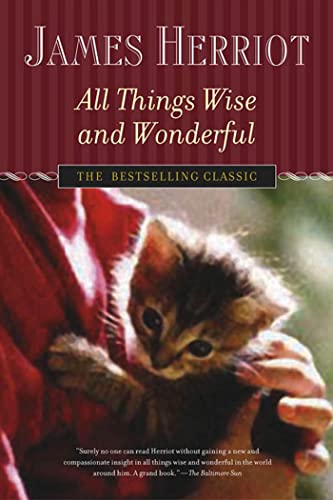
Publication Order of Smudge Books


Publication Order of Short Story Collections Books


Publication Order of Non-Fiction Books




Publication Order of Picture Books


About James Herriot
James Herriot was the pen name of James Alfred Wight, the British veterinary surgeon and author whose warm, comic, and deeply observant books about rural practice in Yorkshire became classics of animal writing. Born in Sunderland in 1916 and raised in Glasgow, Wight trained at Glasgow Veterinary College before moving to the Yorkshire market town of Thirsk, which became the model for the fictional Darrowby. Under the Herriot name, he transformed decades of veterinary work into a series of semi-autobiographical books that blend memoir, anecdote, country comedy, and quiet emotional insight.
Herriot’s writing career began relatively late. He was already an experienced vet when If Only They Could Talk appeared in 1970, followed by It Shouldn’t Happen to a Vet and the later books that would be gathered and retitled for international readers. In the United States, the omnibus All Creatures Great and Small became the title most closely associated with his work, followed by All Things Bright and Beautiful, All Things Wise and Wonderful, The Lord God Made Them All, and Every Living Thing. These books are often read as a continuous life story, though they are shaped more like linked memories than a conventional autobiography.
The Herriot books are rooted in the world of mixed veterinary practice before modern specialization transformed the profession. James moves from farm to farm across the Yorkshire Dales, treating cows, sheep, horses, pigs, dogs, cats, and household pets in weather, mud, darkness, and social situations that are often as difficult as the medical cases. The stories are full of difficult births, stubborn farmers, anxious owners, eccentric animals, unpaid bills, long drives, and the practical comedy of a young vet learning that textbook knowledge does not always survive first contact with a real cow.
Much of the series’ charm comes from its cast. Siegfried Farnon, Herriot’s brilliant, erratic senior partner, is based on Wight’s real colleague Donald Sinclair, while Siegfried’s younger brother Tristan reflects Brian Sinclair. Helen, James’s wife, is based on Wight’s wife, Joan. These fictionalized figures give the books shape and continuity, but Herriot’s method is generous rather than cruel. He notices foolishness, vanity, temper, and absurdity, yet his humor usually rests on affection. Even difficult people are rarely dismissed; they are part of the landscape of practice, as memorable as the animals themselves.
Herriot’s style is deceptively simple. The prose is clear, conversational, and carefully paced, with stories often turning on embarrassment, surprise, tenderness, or a small moral revelation. He understood that animals are not merely sentimental subjects. They bring out human anxiety, pride, loneliness, love, and grief. A sick dog, a prized cow, or an old horse can reveal a family’s finances, a farmer’s stoicism, a child’s devotion, or the quiet dignity of people who rarely express feeling directly.
The books became even more famous through television adaptations, especially the long-running BBC series and the later All Creatures Great and Small adaptation. Yet the original appeal remains on the page: the voice of a working vet who could make routine calls feel rich with comedy and meaning. James Herriot’s legacy lies in turning professional memory into enduring storytelling. His books preserve a vanished rural world, but they endure because their deepest subject is timeless: the bond between people, animals, place, and the daily work of care.