
Below is the complete list of Pam Jenoff books in order. For each series, the chronological reading order is the same as the order of publication.
Publication Order of Jordan Weiss Books


Publication Order of Kommandant’s Girl Books


Publication Order of Winter Guest Books


Publication Order of Standalone Books




Publication Order of Blaze Collection Books





About Pam Jenoff
Pam Jenoff is an American historical novelist and law professor whose fiction is closely associated with World War II, the Holocaust, resistance movements, displaced people, and women forced to make extraordinary choices under occupation and war. A New York Times bestselling author, she is best known for novels such as The Orphan’s Tale, The Lost Girls of Paris, The Woman with the Blue Star, and Code Name Sapphire. Her background in diplomacy, Holocaust-related work, law, and European history gives her fiction an unusually direct connection to many of the subjects she explores.
Jenoff studied international affairs at George Washington University and earned a master’s degree in history from the University of Cambridge. She later received her law degree from the University of Pennsylvania. Before practicing law, she worked as a special assistant to the Secretary of the Army at the Pentagon and then as a Foreign Service officer with the U.S. State Department in Kraków, Poland, where her responsibilities included Polish-Jewish relations and post-Holocaust issues.
Her time in Poland became particularly important to her development as a novelist. Conversations with Holocaust survivors and exposure to the complicated historical memory surrounding wartime Poland helped inspire The Kommandant’s Girl, her 2007 debut. The novel follows Emma Bau, a Jewish woman in Nazi-occupied Kraków who assumes a false identity and becomes involved in resistance activities. Jenoff later continued characters and historical threads from that world in The Diplomat’s Wife and the prequel The Ambassador’s Daughter.
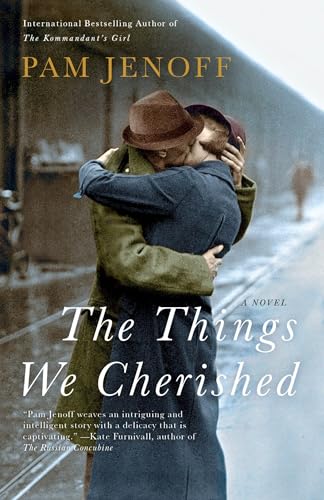
Although World War II eventually became the dominant setting of her bibliography, Jenoff has not confined herself to one continuing series. Almost Home and A Hidden Affair move toward contemporary international suspense, while The Things We Cherished combines a modern legal investigation with wartime history. Over time, however, her strongest novels increasingly concentrated on lesser-known aspects of the Second World War and the experiences of women operating within them.
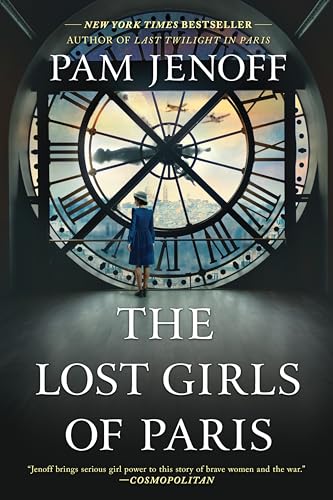
The Orphan’s Tale draws on the history of circuses that sheltered Jews during the Nazi era, following two women whose survival depends upon trust and performance. The Lost Girls of Paris was inspired by female agents of Britain’s Special Operations Executive, using interconnected perspectives to examine courage, betrayal, and the dangers faced by women sent into occupied Europe.
Jenoff continued exploring underground networks and civilian survival in The Woman with the Blue Star, centered on Jews hiding in the sewers beneath Nazi-occupied Kraków, and Code Name Sapphire, which draws on resistance activity in Belgium. Her 2025 novel Last Twilight in Paris turns to the little-known history of Lévitan, a Paris department store used by the Nazis as a prison and clearing point for property stolen from Jewish households.
Women’s relationships are as important to Jenoff’s fiction as wartime suspense. Friendship, motherhood, romantic loyalty, moral compromise, grief, and the creation of surrogate families frequently shape stories in which survival depends upon cooperation between people who might never have met in ordinary circumstances. Her protagonists are often caught between competing obligations, making difficult choices without the benefit of knowing which decision history will later judge as correct.
Alongside writing, Jenoff has maintained an academic legal career and teaches at Rutgers Law School, where her areas include legal writing, professional responsibility, employment law, and evidence. That parallel career complements a bibliography grounded in questions of justice, responsibility, and the consequences of individual decisions.
Jenoff’s novels are best approached as historically connected works rather than one large continuing saga. Across different characters and countries, her defining interest remains consistent: recovering overlooked wartime experiences and examining how ordinary people respond when history places them in circumstances where neutrality is no longer possible.