
Below is the complete list of Octavia E. Butler books in order. For each series, the chronological reading order is the same as the order of publication.
Publication Order of Earthseed Books


Publication Order of Patternmaster Books


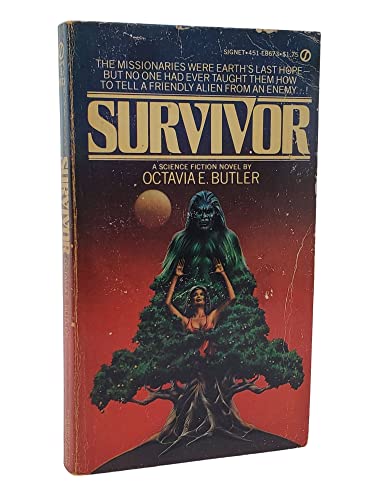


Publication Order of Xenogenesis Books


Publication Order of Standalone Books


Publication Order of Short Stories/Novellas Books
- Speech Sounds (1983)
Speech Sounds was published in 1983 and is listed as book #1 in the Short Stories/Novellas series. 
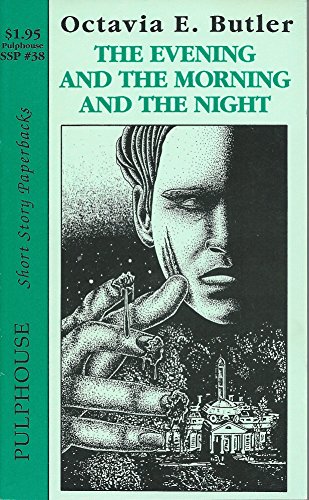
- The Book of Martha (2001)
In the Short Stories/Novellas series, The Book of Martha is book #4 and was published in 2001. 
Publication Order of Short Story Collections Books

- Unexpected Stories (2014)
Published in 2014, Unexpected Stories is listed as book #2 in the Short Story Collections series.
Publication Order of Damian Duffy Graphic Novels Books


Publication Order of Graphic Novels Books
with Nnedi Okorafor

Publication Order of Non-Fiction Books

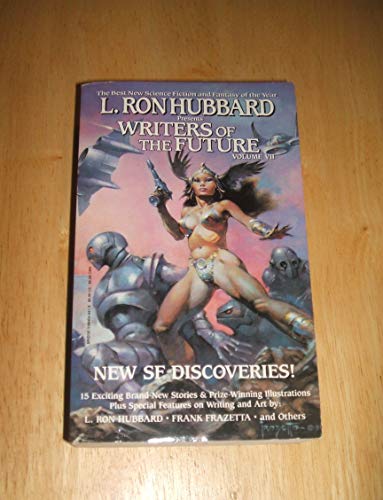
Publication Order of L. Ron Hubbard Presents: Writers of the Future Books












About Octavia E. Butler
Octavia E. Butler (1947–2006) was an American science fiction author whose novels and short stories transformed the genre through their exploration of race, power, gender, survival, and human adaptation. One of the most influential Black writers in speculative fiction, she is best known for Kindred, the Patternist series, the Xenogenesis trilogy, and the Earthseed novels. Her fiction frequently places ordinary people in extraordinary circumstances, forcing them to confront systems of domination, difficult moral choices, and the consequences of change.
Octavia Estelle Butler was born on June 22, 1947, in Pasadena, California. Her father, a shoeshiner, died when she was young, and she was raised primarily by her mother, who worked as a domestic servant, and her grandmother. Butler grew up shy and struggled with dyslexia, finding refuge in books and imaginative storytelling. Her mother’s experiences working in white households later influenced Butler’s understanding of racial and economic inequality.
She began writing stories as a child and became determined to pursue science fiction after watching the 1954 film Devil Girl from Mars. Convinced that she could create better stories, she started developing her own fictional worlds. Although she faced considerable discouragement, Butler continued writing while supporting herself through temporary jobs.
She attended Pasadena City College and later studied at California State University, Los Angeles. A significant step in her development came through the Clarion Science Fiction Writers’ Workshop in 1970, where she studied with established writers and began making professional connections. Her early short fiction included “Crossover,” published in the 1971 Clarion anthology.
Butler’s first published novel, Patternmaster, appeared in 1976. It introduced a future society controlled by telepathic individuals whose powers create rigid hierarchies of domination and dependence. She expanded this fictional universe through Mind of My Mind, Survivor, Wild Seed, and Clay’s Ark. Although published in a different sequence from their internal chronology, these novels collectively became known as the Patternist series.
Wild Seed is particularly notable for its portrayal of Anyanwu, an African woman with extraordinary shapeshifting and healing abilities, and Doro, an immortal being who survives by transferring his consciousness between bodies. Their relationship spans centuries and examines the conflict between coercive power and the desire for personal freedom.
Butler reached a wider audience with Kindred in 1979. The novel follows Dana, a Black woman living in 1970s California who is repeatedly transported to a Maryland plantation before the American Civil War. Her encounters with her enslaved ancestors force her to confront the violence of slavery and the complicated circumstances surrounding her own existence. Combining historical fiction with speculative time travel, Kindred remains one of Butler’s most widely read works.
Her Xenogenesis trilogy, also published under the collective title Lilith’s Brood, began with Dawn in 1987. The sequence continues with Adulthood Rites and Imago, exploring humanity’s survival after a devastating nuclear war. The alien Oankali offer humanity a future through genetic exchange, raising unsettling questions about consent, identity, biological transformation, and the meaning of being human.
In the 1990s, Butler created the Earthseed series, consisting of Parable of the Sower (1993) and Parable of the Talents (1998). Set in a United States devastated by economic inequality, environmental collapse, and social violence, the novels follow Lauren Olamina, a young woman who develops a belief system called Earthseed. Its central principle, “God is Change,” reflects the importance of adaptation and purposeful action throughout Butler’s fiction.
Parable of the Talents won the Nebula Award for Best Novel. Butler had previously received Hugo and Nebula Awards for shorter works, including “Speech Sounds” and “Bloodchild.” In 1995, she became the first science fiction writer to receive a MacArthur Fellowship, a major recognition of her literary achievements.
Her final novel, Fledgling, appeared in 2005. It reimagines vampire mythology through Shori, a genetically modified young vampire whose unusual identity challenges the traditions of her species. Like much of Butler’s work, the novel examines prejudice, dependence, consent, and the unequal distribution of power.
Butler died on February 24, 2006, in Lake Forest Park, Washington, at the age of 58. She left behind a body of work that continues to influence science fiction, fantasy, and contemporary literary discussions about social change.
Her novels are distinguished by their refusal to offer easy solutions. Characters often survive through compromise, adaptation, and cooperation, yet those choices can carry disturbing consequences. Butler was particularly interested in how hierarchies emerge, why people seek control over others, and whether humanity can overcome its destructive tendencies.
Octavia E. Butler’s legacy extends well beyond the boundaries of science fiction. Through works such as Kindred, Dawn, and Parable of the Sower, she demonstrated how speculative storytelling could examine historical injustice, biological possibility, and political instability with extraordinary depth. Her fiction remains influential because it asks not only what the future might look like, but what human beings may have to become in order to survive it.