
Below is the complete list of Mary Pope Osborne’s Magic Tree House books in order. For this series, the chronological reading order is the same as the order of publication.
Publication Order of Magic Tree House Books


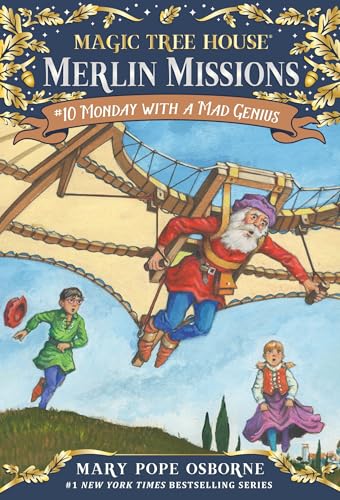
Publication Order of Magic Tree House Merlin Missions Books




Publication Order of Magic Tree House Super Edition Books

Publication Order of Magic Tree House Fact Tracker Books


Publication Order of Magic Tree House Non-Fiction Books


About Magic Tree House
Mary Pope Osborne’s Magic Tree House series is one of the most enduring early chapter-book series for children, built around a simple but powerful idea: books can take readers anywhere. The series follows siblings Jack and Annie, two children from Frog Creek, Pennsylvania, who discover a mysterious tree house filled with books. When they point to a picture, make a wish, and travel through time or across the world, each adventure becomes both a story and a first step into history, science, mythology, or culture.
The opening book, Dinosaurs Before Dark, establishes the rhythm that has made the series so accessible to young readers. Jack is cautious, organized, and curious in a note-taking way; Annie is bold, instinctive, and quick to act. Their contrasting personalities give the books an easy balance. Jack often wants to understand the rules before moving forward, while Annie is already halfway into the adventure. Together, they allow readers to experience both wonder and reassurance: the worlds may be strange, but the children at the center remain familiar.
The early Magic Tree House books are especially effective because they turn learning into movement. Jack and Annie visit places and moments that feel exciting without becoming overwhelming: the age of dinosaurs, medieval castles, ancient Egypt, pirate ships, rainforests, the moon, Pompeii, the Arctic, and other settings that naturally invite questions. Osborne keeps the language clear and the chapters short, but she does not talk down to readers. The books respect a child’s curiosity by giving just enough information to make the adventure feel real while leaving room for further discovery.
As the series grows, the tree house becomes more than a magical vehicle. Morgan le Fay and later Merlin give the books a broader fantasy framework, sending Jack and Annie on missions that involve riddles, quests, historical figures, legends, and moral choices. This expansion keeps the series from feeling repetitive. The earliest books often center on survival and discovery, while later adventures add more deliberate tasks, magical objects, and larger stakes. Even then, the core remains steady: two children enter a book, learn from the world inside it, and return home changed by what they have seen.
The Merlin Missions are important because they show the series aging slightly with its readers. They tend to be longer and more involved than the simplest early adventures, giving children who have grown comfortable with Jack and Annie a way to continue without immediately leaving the world behind. Osborne also expands the educational side through the Magic Tree House Fact Trackers, nonfiction companion books that explore the real subjects behind the adventures. These companions are part of the series’ lasting classroom appeal, because they make it easy for fiction to lead into research.
The Magic Tree House books are best understood as a reading bridge. They help children move from being read to into becoming independent readers, using familiar characters, predictable structure, and exciting settings to build confidence. The formula is not a weakness; it is part of the design. Young readers know Jack and Annie will face danger, learn something useful, and find a way home, and that pattern makes each new subject less intimidating.
The series endures because it treats knowledge as adventure. History is not presented as a list of dates, and science is not reduced to facts on a page. Through Jack and Annie, the world becomes reachable, readable, and alive. For many children, Magic Tree House is not just a series about time travel. It is one of the first experiences of discovering that every book can open a door.