
Below is the complete list of Lucy Maud L.M. Montgomery books in order. For each series, the chronological reading order is the same as the order of publication.
Publication Order of Anne of Green Gables Books


Publication Order of Chronicles of Avonlea Books


Publication Order of Emily Books


Publication Order of King Family Books


Publication Order of L.M. Montgomery’s Complete Journals Books




Publication Order of Selected Journals Of L.M. Montgomery Books


Publication Order of Silver Bush Books

Publication Order of Standalone Books


Publication Order of Non-Fiction Books

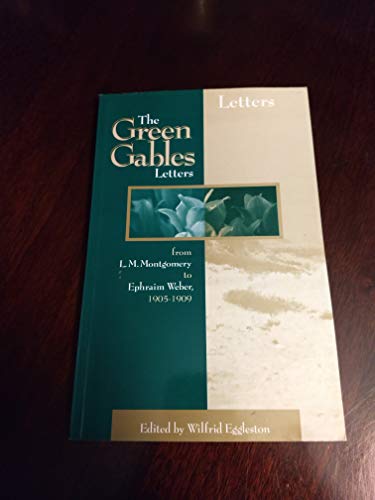
- Four From Lucy (2018)
Four From Lucy is a 2018 release and appears as book #3 in the Non-Fiction series. 

Publication Order of Poetry Books
Publication Order of Collections Books


Publication Order of All Aboard Reading Books

About Lucy Maud L.M. Montgomery
Lucy Maud Montgomery was a Canadian novelist, short-story writer, poet, and diarist whose fiction turned Prince Edward Island into one of the most recognizable landscapes in children’s and Canadian literature. Publishing as L.M. Montgomery, she is best known for creating Anne Shirley in Anne of Green Gables, but her career encompassed several distinct series, standalone novels, hundreds of short stories and poems, and extensive private journals. Her work repeatedly returns to imaginative young women, complicated families, creative ambition, friendship, belonging, and the emotional power of place.
Montgomery was born in 1874 in Clifton, now New London, Prince Edward Island. Her mother died when she was very young, and she was raised largely by her maternal grandparents in Cavendish. The experience of childhood loneliness, combined with an intense imaginative life and attachment to the Island landscape, became deeply relevant to her fiction without making her heroines simple self-portraits. She began writing early, published a poem while still a teenager, trained as a teacher at Prince of Wales College in Charlottetown, and later studied literature at Dalhousie University in Halifax.
Before becoming a famous novelist, Montgomery supported herself through teaching and newspaper work while steadily selling poems and short stories to periodicals. Anne of Green Gables, her first published novel, appeared in 1908 after an earlier round of rejection had led her to put the manuscript aside. Its success transformed her career. Anne Shirley—the red-haired orphan mistakenly sent to siblings Matthew and Marilla Cuthbert—combined impulsiveness, verbal exuberance, fierce sensitivity, and imaginative power in a character who quickly attracted an international readership.
Montgomery continued Anne’s life across a series that moves well beyond the heroine’s arrival at Green Gables. The later books follow changes in education, work, marriage, family, and community, while eventually shifting substantial attention toward younger generations. The series was not written in a simple uninterrupted chronological progression, which helps explain some of its bibliographical complexity: Montgomery returned to earlier periods of Anne’s life after publishing books set later.
Anne, however, represents only one part of her fiction. The Emily trilogy, beginning with Emily of New Moon, follows an aspiring writer and is often regarded as especially revealing of Montgomery’s interest in artistic ambition, rejection, discipline, and the cost of a creative life. The Story Girl and The Golden Road center on storytelling and childhood community, while the Pat books explore an unusually intense attachment to home. Standalone works such as The Blue Castle and Jane of Lantern Hill show her range beyond the better-known series, with heroines confronting restricted lives and finding unexpected forms of independence.
In 1911, Montgomery married Presbyterian minister Ewen Macdonald and moved to Ontario, where the demands of marriage, motherhood, church life, and public authorship accompanied a career that had already made her internationally known. She continued writing despite periods of severe personal strain and her husband’s recurring mental illness. Her journals, maintained across much of her life and published after her death, later transformed scholarly understanding of the distance between the public success of her books and the private difficulties she endured.
Montgomery was appointed an Officer of the Order of the British Empire in 1935. She died in Toronto in 1942 and was buried in Cavendish, the community most closely associated with her imagination. Her bibliography is best understood not simply as an extension of Anne Shirley’s popularity but as a broad, interconnected body of fiction about memory, aspiration, female autonomy, family obligation, and the creation of belonging. Across Avonlea, New Moon, Silver Bush, and her standalone novels, Montgomery made landscape emotionally active: homes, roads, trees, shorelines, and communities become part of how characters understand who they are and what they might yet become.