
Below is the complete list of Jo Nesbo books in order. For each series, the chronological reading order is the same as the order of publication.
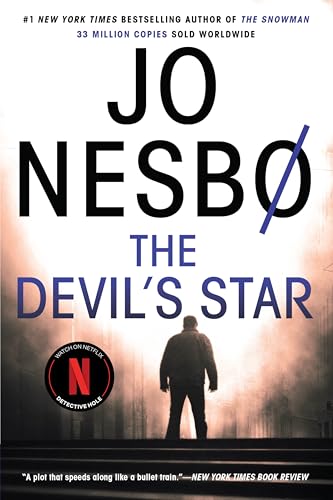
Publication Order of Harry Hole Books


- The Leopard (2009)
The Leopard is a 2009 release and appears as book #8 in the Harry Hole series. 




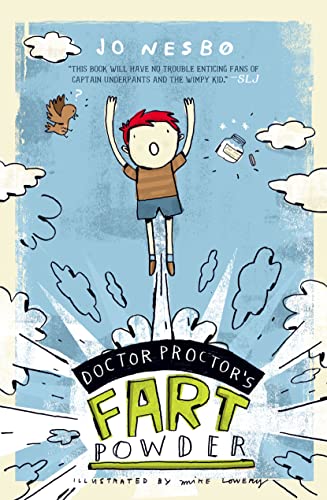
Publication Order of Doktor Proctor Books



Publication Order of Blood on Snow Books


Publication Order of Kingdom Books


Publication Order of Standalone Books
- Wolf Hour (2025)
In the Standalone series, Wolf Hour is book #4 and was published in 2025.


Publication Order of Short Stories/Novellas Books

Publication Order of Short Story Collections Books

Publication Order of Hogarth Shakespeare Books

About Jo Nesbo
Jo Nesbø is a Norwegian novelist, musician, songwriter, and screenwriter whose darkly inventive crime fiction has made him one of Norway’s most internationally successful authors. He is best known for creating Oslo police detective Harry Hole, a brilliant but self-destructive investigator whose battles with addiction, authority, violent criminals, and his own impulses unfold across a long-running series. Nesbø has also written standalone thrillers, interconnected crime novels, short stories, horror, and the comic Doctor Proctor books for younger readers.
Born in Oslo in 1960 and raised in Molde, Nesbø grew up in a household shaped by books and storytelling. His mother was a librarian, while his father’s wartime experiences later influenced The Redbreast, which examines Norwegian collaboration and resistance during the Second World War. Football was Nesbø’s first serious ambition. He played for Molde’s senior team as a teenager and hoped for a professional career, but severe knee injuries ended those plans.
After completing military service in northern Norway, he studied economics and business administration in Bergen. He subsequently worked in finance as a stockbroker and financial analyst. Music developed alongside that career: Nesbø became the lead singer, guitarist, and principal songwriter of Di Derre, whose witty, melodic pop-rock made the band highly successful in Norway during the 1990s. He continued working in finance even while touring, an exhausting combination that eventually prompted an extended break abroad.
A publisher had invited him to write about life on the road with Di Derre, but during a flight to Australia he instead conceived a crime novel about a Norwegian detective arriving in Sydney. The Bat, published in 1997, introduced Harry Hole and won both the Riverton Prize for best Norwegian crime novel and the Glass Key for Nordic crime fiction. Nesbø followed it with Cockroaches, set largely in Bangkok, before bringing Harry more fully into Norwegian history and Oslo police politics through The Redbreast.
Harry Hole became the center of Nesbø’s career, but the series is distinguished by more than elaborate murder investigations. Harry is perceptive, obsessive, emotionally damaged, and frequently at war with police bureaucracy. His relationships with Rakel Fauke, her son Oleg, and a recurring group of colleagues give the books a cumulative emotional structure. Novels such as The Snowman, The Leopard, Phantom, and Knife intensify both the criminal threats and the personal cost of Harry’s refusal to abandon a case.
Nesbø’s independent crime novels reveal a broader range of protagonists and structures. Headhunters is a compact, darkly comic thriller about recruitment, art theft, and escalating deception. The Son combines revenge with corruption inside Oslo’s criminal and law-enforcement worlds, while Macbeth relocates Shakespeare’s tragedy to a rain-soaked industrial city dominated by drugs and political ambition. Blood on Snow and Midnight Sun are connected stories about hired killers attempting to escape the systems that employ them. The Kingdom and Blood Ties form a separate family saga centered on two brothers, their isolated community, and the crimes beneath their prosperity.
His bibliography also includes short-story collections and The Night House, a departure into psychological and supernatural horror. For children, the Doctor Proctor series follows an eccentric inventor and two young companions through absurd adventures involving powerful fart powder, time travel, and historical chaos.
Across these different forms, Nesbø writes about obsession, betrayal, moral compromise, and the unstable boundary between hunter and hunted. His plots are tightly engineered, but their darkest turns usually emerge from recognizable human weaknesses: jealousy, shame, ambition, grief, and the stories people construct to justify what they have done.