
Below is the complete list of Gayle Lynds books in order. For each series, the chronological reading order is the same as the order of publication.
Publication Order of Judd Ryder & Eva Blake Books


Publication Order of Liz Sansborough Books


Publication Order of Three Investigators Crimebuster Books


Publication Order of Standalone Books
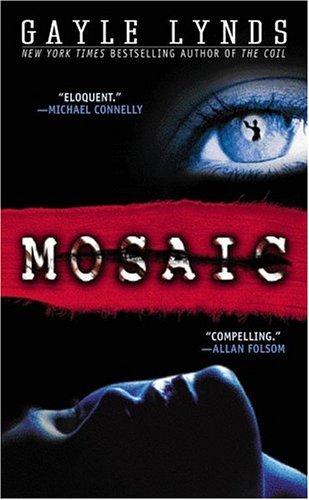


Publication Order of Covert-One Books


Publication Order of Harold Middleton Books

Publication Order of Mack Bolan Books


Publication Order of The MatchUp Collection Books

Publication Order of The X-Files Books

Publication Order of Nick Carter: Killmaster Books


About Gayle Lynds
Gayle Lynds is an American novelist whose work helped establish the modern female-led espionage thriller as a substantial branch of the genre rather than a variation on the traditional male spy narrative. Her fiction combines intelligence operations, historical mysteries, political conspiracy, psychological pressure, and international pursuit. Although many of her novels feature experienced agents and elaborate clandestine organizations, their tension often depends on more personal questions of memory, betrayal, divided loyalty, and the identities people create to survive secret lives.
Lynds began her professional writing career as a reporter for The Arizona Republic. Her investigative journalism contributed to changes in Arizona legislation, giving her early experience in following evidence through institutions resistant to scrutiny. She later worked as an editor at a government think tank and held a Top Secret security clearance. That position exposed her to the language, procedures, and guarded personalities surrounding national-security work, providing useful foundations for fiction concerned with intelligence communities and concealed government operations.
Before publishing major thrillers under her own name, Lynds wrote literary short stories and contributed to established adventure properties. Her early work included novels in the Nick Carter and Mack Bolan lines, while the name G. H. Stone appeared on her books for The Three Investigators. These projects developed her ability to sustain action, work within an existing fictional framework, and construct internationally oriented plots long before her own-name debut.
That debut, Masquerade, appeared in 1996 and introduced a woman suffering from amnesia who may be connected to the intelligence world pursuing her. The novel established several recurring elements of Lynds’s fiction: an uncertain identity, secrets hidden inside official institutions, a capable female protagonist, and a conspiracy whose real dimensions emerge gradually. Later standalones such as Mosaic, Mesmerized, The Coil, and The Last Spymaster continued her exploration of espionage through stories involving family history, scientific discovery, fugitive agents, covert technology, and the lingering machinery of the Cold War.
The Last Spymaster is particularly representative of her approach. Its conflict between escaped former intelligence chief Charles “Jay” Tice and CIA operative Elaine Cunningham is driven not only by pursuit but by competing interpretations of loyalty and treason. Lynds frequently treats intelligence officers as people shaped by secrecy rather than glamorous professionals untouched by their work. Her agents lie for a living, but the most consequential deceptions are often those maintained within families, partnerships, and their own understanding of the past.
The Book of Spies introduced former intelligence officer Judd Ryder and rare-books curator Eva Blake through a conspiracy surrounding a legendary lost library. They returned in The Assassins, making these two novels a connected sequence within an otherwise largely standalone original bibliography. The books combine historical artifacts and secret societies with modern intelligence operations, reflecting Lynds’s interest in how knowledge accumulated across centuries can become a contemporary instrument of power.
Lynds also collaborated with Robert Ludlum in creating Covert-One, the covert government organization led into crises involving biological weapons, advanced technology, and international conspiracy. She wrote The Hades Factor, The Paris Option, and The Altman Code within the series. These books belong to the Ludlum franchise rather than her independent fictional world, although their scientific threats, global settings, and institutional intrigue align closely with her established strengths.
Beyond her novels, Lynds co-founded International Thriller Writers with David Morrell and helped establish ThrillerFest. Her bibliography is best understood by separating her original espionage novels, the connected Judd Ryder and Eva Blake stories, the Covert-One collaborations, and her earlier pseudonymous work. Across those categories, she remains distinguished by intricate conspiracies, formidable women, morally ambiguous intelligence professionals, and an insistence that secrets matter most when they alter a character’s understanding of who can be trusted.