
Below is the complete list of Don Winslow books in order. For each series, the chronological reading order is the same as the order of publication.
Publication Order of Boone Daniels Books


Publication Order of Danny Ryan Books


Publication Order of Frank Decker Books


Publication Order of Neal Carey Books


Publication Order of Savages Books


Publication Order of Power Of The Dog Books


Publication Order of Standalone Books



- Missing: New York (2014)
Missing: New York was published in 2014 and is listed as book #6 in the Standalone series. 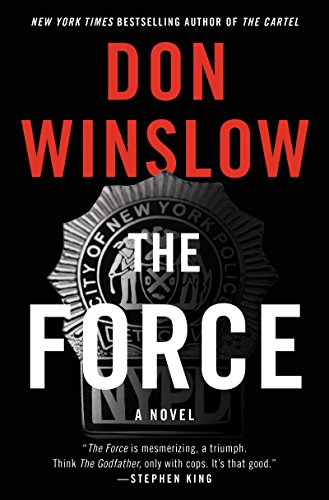
Publication Order of Short Story Collections Books


Publication Order of Non-Fiction Books

Publication Order of Short Stories/Novellas Books
- Crime 101 (2021)
Crime 101 was published in 2021 and is listed as book #1 in the Short Stories/Novellas series. 


Publication Order of Akashic Noir Books


Publication Order of Reed Farrel Coleman Short Story Collections Books
About Don Winslow
Don Winslow is an American crime novelist best known for hard-edged stories about drug trafficking, organized crime, corruption, law enforcement, loyalty, and the way institutions shape individual lives. His major works include the Cartel trilogy, the Neal Carey novels, the Boone Daniels books, and the City trilogy beginning with City on Fire. Winslow’s fiction ranges from private-eye mysteries and surf noir to large-scale crime epics, but across those different forms he repeatedly focuses on characters caught between personal codes and systems far more powerful than themselves.
Born in New York City in 1953, Winslow grew up in a family connected to the Navy and moved frequently during childhood. Before becoming a full-time writer, he held an unusually wide range of jobs. He worked as a private investigator, safari guide, movie-theater manager, and consultant, among other roles, and spent years traveling in the United States and abroad. Those experiences later supplied material for the criminal worlds, investigative work, and varied settings of his fiction.
Winslow’s first major series centered on Neal Carey, a young investigator recruited by a discreet organization that solves sensitive problems for wealthy clients. Beginning with A Cool Breeze on the Underground, the books combine private-eye fiction with international settings and a protagonist whose education has come as much from surviving difficult circumstances as from formal training.
His career expanded significantly with The Power of the Dog, published in 2005. The novel follows DEA agent Art Keller through decades of conflict with Mexican drug cartels and became the foundation of Winslow’s Cartel trilogy. The Cartel and The Border continued that story, widening the scope to include politicians, journalists, traffickers, police, soldiers, migrants, and civilians affected by the drug war. The trilogy is notable for treating cartel violence not as an isolated criminal phenomenon but as part of a larger system involving money, government policy, corruption, and international demand.
Winslow has also written extensively about Southern California. The Dawn Patrol and The Gentlemen’s Hour feature Boone Daniels, a private investigator and dedicated surfer whose cases unfold around San Diego’s beaches and coastal communities. Savages and The Kings of Cool move into the marijuana trade and the darker side of California counterculture, combining crime, friendship, and rapid-fire dialogue.
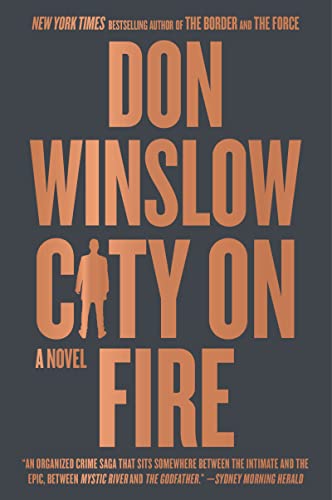
His later City trilogy—City on Fire, City of Dreams, and City in Ruins—recasts elements of classical epic and tragedy within the world of Irish and Italian organized crime in Rhode Island and beyond. Danny Ryan begins as a relatively low-level member of a criminal family and is gradually transformed by war, exile, ambition, and the consequences of survival. The trilogy became Winslow’s announced final major fiction project.
Film and television have frequently drawn from his work. Savages was adapted into a 2012 film directed by Oliver Stone, while several other novels and series have been optioned or developed for screen adaptation.
Winslow retired from writing fiction after City in Ruins in 2024, choosing to devote more time to political activism and public campaigning. By then, his bibliography had established him as one of the most prominent American crime writers of his generation.
Across his work, Winslow is less interested in crime as a puzzle than as a system. Detectives may solve cases and criminals may rise or fall, but the larger forces—money, power, family, politics, addiction, and institutional corruption—remain. His novels repeatedly ask what happens when a person tries to live by a private moral code inside a world where almost everyone is compromised.