
Below is the complete list of Joe Abercrombie’s The First Law books in order. For this series, the chronological reading order is the same as the order of publication.
Publication Order of The First Law Books


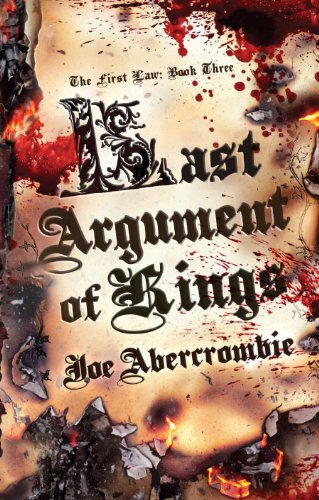
- Tough Times All Over (2014)
In the The First Law series, Tough Times All Over is book #4 and was published in 2014. - Two’s Company (2016)
Two’s Company was first published in 2016; within the The First Law series, it is listed as book #5.
Publication Order of First Law World Books


- The Fool Jobs (2016)
In the First Law World series, The Fool Jobs is book #4 and was published in 2016.
Publication Order of First Law World Collections Books

About The First Law
Joe Abercrombie’s First Law series is a sprawling grimdark fantasy sequence built around war, power, self-deception, and the uncomfortable gap between the stories people tell about themselves and the people they actually become. It begins with The First Law Trilogy—The Blade Itself, Before They Are Hanged, and Last Argument of Kings—and expands through three major standalones, short fiction, and The Age of Madness trilogy. The result is not a tidy heroic saga but a brutal, funny, politically cynical, and deeply character-driven world where victory rarely makes anyone better.
The original trilogy introduces the core geography and moral atmosphere of the series. The Union is wealthy, bureaucratic, corrupt, and self-satisfied. The North is violent, clan-bound, and haunted by old reputations. Gurkhul, the Old Empire, Styria, and other regions widen the world beyond the familiar map of northern war and imperial politics. Abercrombie uses recognizable epic-fantasy ingredients—wizards, warriors, quests, empires, ancient enemies—but turns them inside out. Prophecy gives way to manipulation. Glory gives way to mud, pain, and memory. The wise old mentor may be the most dangerous man in the room.
The first trilogy’s power comes from its characters. Logen Ninefingers is a weary barbarian trying to escape the legend of the Bloody-Nine, though the past keeps proving harder to leave behind than he wishes. Sand dan Glokta, a crippled torturer and former war hero, is one of modern fantasy’s great bitter creations: monstrous, funny, perceptive, and often more honest about human ugliness than the supposedly honorable people around him. Jezal dan Luthar begins as a vain young nobleman and becomes useful precisely because power can be built around emptiness. Bayaz, Ferro, Dogman, West, and others complete a cast defined by contradiction rather than moral clarity.
After the trilogy, the standalones are essential rather than optional. Best Served Cold shifts to Styria and turns revenge into an escalating machine of betrayal, politics, and blood. The Heroes compresses a war story into a few days around one battlefield, exposing courage, vanity, command, fear, and pointlessness with remarkable economy. Red Country moves into frontier territory, blending western elements with old violence and buried identities. These books deepen the First Law world by changing form: revenge tragedy, war novel, and frontier journey, all within the same moral universe.
Sharp Ends gathers short fiction that fills gaps, reframes familiar figures, and adds sharp side angles to the larger sequence. It is not the best entry point, but for readers already invested in the world, it gives useful texture and shows Abercrombie’s gift for compact brutality and comic timing.
The Age of Madness trilogy—A Little Hatred, The Trouble with Peace, and The Wisdom of Crowds—moves the world forward into industry, banking, revolution, public trials, and class rage. The children and successors of the earlier generation inherit not only names and fortunes, but lies, debts, violence, and systems of power. The trilogy proves that the First Law world can evolve historically without becoming more hopeful.
Publication order is the strongest way to read the First Law books because Abercrombie’s world depends on consequence. Events echo across decades, reputations distort the truth, and characters often become legends for the wrong reasons. The series endures because it is savage without being empty. Beneath the cynicism is a bleak human comedy about people who glimpse change, sometimes even want it, and still return, again and again, to the same old knives.