
Below is the complete list of Lauren Oliver’s Delirium books in order. For this series, the chronological reading order is the same as the order of publication.
Publication Order of Delirium Books


Publication Order of Delirium Collections Books

About Delirium
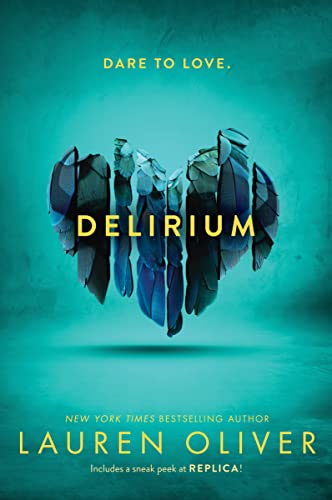
Lauren Oliver’s Delirium trilogy imagines an alternate United States where love has been classified as a dangerous disease called amor deliria nervosa. Citizens are monitored, matched with approved partners, and subjected to a government procedure known as the cure shortly after turning eighteen. The operation suppresses intense emotional attachment, promising social stability at the cost of passion, intimacy, and individual choice. Through Lena Haloway’s changing understanding of that system, the series develops from personal awakening into a broader story of resistance and political revolution.
At the beginning of Delirium, Lena believes in the cure. Her mother’s repeated refusal to submit successfully to the procedure has left the family burdened by shame, and Lena wants the predictable life the government promises. She expects to be evaluated, assigned a husband, and protected from the emotional disorder that supposedly destroyed her mother. Meeting a husband, and protected Alex, a young man who appears to have been cured, forces her to reconsider everything she has accepted about love and obedience.
The opening novel is intimate and deliberately enclosed. Portland, Maine, is surrounded by electrified borders intended to separate regulated citizens from the Invalids living in the Wilds. Government-approved books, revised religious texts, curfews, raids, and evaluations shape daily life so thoroughly that repression initially appears ordinary. Lena’s transformation is gradual because Oliver shows how authoritarian systems survive by making fear feel like common sense.
Pandemonium changes both the setting and narrative structure. Its chapters alternate between “then,” covering Lena’s difficult adjustment to life in the Wilds, and “now,” following her work within the resistance. The fractured chronology reflects the division between the girl she was and the person she is becoming. Lena is no longer merely attempting to preserve a private relationship; she must survive hunger, loss, displacement, infiltration, and the knowledge that resistance movements also demand sacrifice.
Julian Fineman becomes central during this stage. As the son of an influential supporter of the cure, he represents a different path toward questioning the system. His experiences complicate Lena’s grief over Alex and force her to confront whether love can take more than one form without making an earlier attachment meaningless.
Requiem expands the narrative again by alternating between Lena and her former best friend, Hana Tate. Lena is now moving with the resistance as conflict spreads across the country, while Hana remains inside Portland preparing to marry its future mayor. Their contrasting viewpoints show two forms of captivity: the physical danger of rebellion and the emotional emptiness created by compliance. Hana’s position also reveals that privilege does not eliminate fear; it merely changes what a person risks by resisting.
Relationships established in the first two novels converge during the final conflict. Alex’s return, Julian’s place beside Lena, Hana’s approaching marriage, and the government’s intensifying campaign against the Invalids turn personal choices into political ones. The trilogy does not reduce freedom to choosing between romantic partners. Its larger question is whether safety has any value when people are denied the emotions that give their lives meaning.
The companion stories about Hana, Annabel, Raven, and Alex add perspectives that Lena cannot provide, but they supplement rather than replace the trilogy. Publication order preserves the intended revelations and Lena’s movement from fearful obedience to active resistance. Across the three principal novels, love is treated not simply as romance but as memory, friendship, family, grief, and the uncontrolled attachment that makes people impossible o govern completely.