
Below is the complete list of Arthur Conan Doyle books in order. For each series, the chronological reading order is the same as the order of publication.
Publication Order of Sherlock Holmes Books

Publication Order of The Adventures of Sherlock Holmes Books

- The Red-headed League (1891)
Published in 1891, The Red-headed League is listed as book #2 in the The Adventures of Sherlock Holmes series. 





Publication Order of The Memoirs of Sherlock Holmes Books
- The Adventure of Silver Blaze (1892)
The Adventure of Silver Blaze was published in 1892 and is listed as book #1 in the The Memoirs of Sherlock Holmes series. 
- The Adventure of the Yellow Face (1893)
The Adventure of the Yellow Face is a 1893 release and appears as book #3 in the The Memoirs of Sherlock Holmes series. 


Publication Order of The Return of Sherlock Holmes Books


- The Adventure of the Dancing Men (1903)
The Adventure of the Dancing Men is a 1903 release and appears as book #3 in the The Return of Sherlock Holmes series. - The Adventure of the Solitary Cyclist (1904)
In the The Return of Sherlock Holmes series, The Adventure of the Solitary Cyclist is book #4 and was published in 1904. - The Adventure of the Priory School (1904)
The Adventure of the Priory School was first published in 1904; within the The Return of Sherlock Holmes series, it is listed as book #5. 
- The Adventure of Charles Augustus Milverton (1904)
Published in 1904, The Adventure of Charles Augustus Milverton is listed as book #7 in the The Return of Sherlock Holmes series. 

- The Adventure of the Golden Pince-Nez (1904)
The Adventure of the Golden Pince-Nez was first published in 1904; within the The Return of Sherlock Holmes series, it is listed as book #10. 


Publication Order of Sherlock Holmes – His Last Bow Books


- The Adventure of the Red Circle (1911)
In the Sherlock Holmes – His Last Bow series, The Adventure of the Red Circle is book #4 and was published in 1911. 


Publication Order of The Case-Book of Sherlock Holmes Books



Publication Order of Sherlock Holmes Short Story Collections Books


- The Complete Sherlock Holmes (1927)
The Complete Sherlock Holmes was published in 1927 and is listed as book #6 in the Sherlock Holmes Short Story Collections series. - The Collected Sherlock Holmes Short Stories (1927)
Published in 1927, The Collected Sherlock Holmes Short Stories is listed as book #7 in the Sherlock Holmes Short Story Collections series. 

- Sherlock Holmes: The Complete Novels and Stories, Volume One (1985)
Sherlock Holmes: The Complete Novels and Stories, Volume One was first published in 1985; within the Sherlock Holmes Short Story Collections series, it is listed as book #10. 
- Sherlock Holmes: The Complete Novels and Stories, Volume Three (1986)
Published in 1986, Sherlock Holmes: The Complete Novels and Stories, Volume Three is listed as book #12 in the Sherlock Holmes Short Story Collections series. 

Publication Order of Gerard Short Story Collections Books


Publication Order of Professor Challenger Books



Publication Order of Standalone Books





Publication Order of Short Stories/Novellas Books


- The Adventure of the Yellow Face (1893)
In the Short Stories/Novellas series, The Adventure of the Yellow Face is book #4 and was published in 1893. - The Adventure of the Red Circle (1911)
The Adventure of the Red Circle is a 1911 release and appears as book #8 in the Short Stories/Novellas series. - The Horror of the Heights (1913)
The Horror of the Heights was first published in 1913; within the Short Stories/Novellas series, it is listed as book #10. 

- The Leather Funnel (2003)
The Leather Funnel is a 2003 release and appears as book #13 in the Short Stories/Novellas series. 
- The Case of Lady Sannox (2013)
The Case of Lady Sannox was first published in 2013; within the Short Stories/Novellas series, it is listed as book #15. - A Literary Mosaic (2014)
A Literary Mosaic was published in 2014 and is listed as book #16 in the Short Stories/Novellas series. - That Little Square Box (2014)
Published in 2014, That Little Square Box is listed as book #17 in the Short Stories/Novellas series. 


Publication Order of Short Story Collections Books





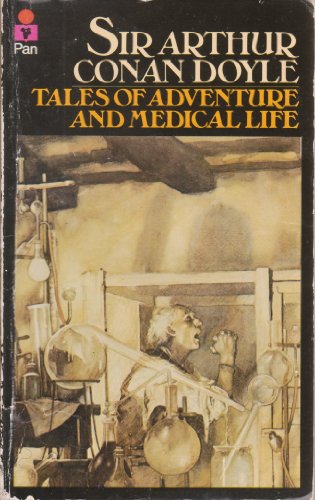



Publication Order of Non-Fiction Books






Publication Order of Poetry Collections Books
- Songs of Action (1898)
Songs of Action was published in 1898 and is listed as book #1 in the Poetry Collections series. - Songs of the Road (1911)
Published in 1911, Songs of the Road is listed as book #2 in the Poetry Collections series.
Publication Order of Murderous Christmas Stories Books
Publication Order of The Year of the Cat Books

Publication Order of Gothic Fantasy Books


Publication Order of MIT Press/Radium Age Books

About Arthur Conan Doyle
Arthur Conan Doyle was a Scottish writer and physician whose creation of Sherlock Holmes permanently changed detective fiction. Born in Edinburgh in 1859, Doyle trained in medicine at the University of Edinburgh, where he encountered Dr. Joseph Bell, a surgeon famous for sharp observation and diagnostic reasoning. Bell’s methods helped shape the intellectual model behind Holmes: a detective who reads physical detail, behavior, and absence as evidence, turning ordinary surroundings into a field of clues.
Doyle worked as a doctor before his writing career fully took hold, including time as a ship’s surgeon and later as a general practitioner in Southsea. The long hours without many patients gave him space to write, and his early fiction ranged well beyond mystery. He wrote adventure stories, historical novels, horror tales, science fiction, war writing, and essays, but Sherlock Holmes became the figure by which his name would be remembered. Holmes first appeared in A Study in Scarlet in 1887, with Dr. John Watson serving as narrator, companion, and human counterweight to the detective’s cold brilliance.
The Holmes stories became famous through their publication in magazines, especially The Strand Magazine, where readers followed the detective’s cases with intense enthusiasm. Doyle’s great innovation was not simply the creation of a clever investigator. He built a complete reading experience around method, atmosphere, and character contrast. Holmes’s deductions, Watson’s plainspoken narration, the Baker Street rooms, London fog, clients arriving with strange problems, and the final explanation all became part of the architecture of modern detective fiction.
Doyle had an uneasy relationship with his most famous creation. He wanted to be taken seriously for historical fiction, particularly works such as Micah Clarke, The White Company, and Sir Nigel. He eventually tried to kill Holmes in “The Final Problem,” sending him over the Reichenbach Falls with Professor Moriarty. Public pressure and continuing demand later brought Holmes back, first in The Hound of the Baskervilles, set before the detective’s supposed death, and then more directly in “The Adventure of the Empty House.” That tension between authorial ambition and popular demand became one of the defining stories behind the Holmes canon.
His bibliography also includes the Professor Challenger stories, beginning with The Lost World, a scientific adventure about an expedition to a plateau where prehistoric creatures survive. Challenger is very different from Holmes: loud, combative, egotistical, and physically forceful, but he reflects Doyle’s broader fascination with discovery, danger, science, and the limits of accepted knowledge. Doyle’s Brigadier Gerard stories, set during the Napoleonic Wars, show another side of his imagination, mixing military adventure with comedy and historical romance.
Doyle’s public life extended far beyond fiction. He served as a medical volunteer during the Boer War, wrote in defense of Britain’s conduct, and was knighted in 1902. He also campaigned in real criminal cases, most notably those of George Edalji and Oscar Slater, where he argued that injustice had been done. These efforts showed that his interest in evidence, fairness, and wrongful accusation was not confined to fiction.
In later life, Doyle became deeply committed to spiritualism, a belief that shaped his public lectures and nonfiction. This part of his career remains controversial, especially because it contrasts so strongly with the rational image of Sherlock Holmes. Yet it also reveals Doyle’s broader temperament: he was drawn to mystery, conviction, justice, and unseen possibilities in more than one form.
Arthur Conan Doyle died in 1930, leaving a body of work much larger than Sherlock Holmes but forever illuminated by him. His achievement lies not only in inventing a great detective, but in creating a durable fictional partnership between brilliance and witness, deduction and storytelling, Holmes and Watson.