
Below is the complete list of Larry McMurtry books in order. For each series, the chronological reading order is the same as the order of publication.
Publication Order of Thalia, Texas Books


Publication Order of Last Picture Show Books


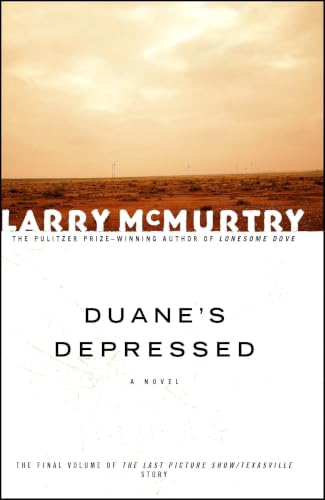


Publication Order of Houston Books


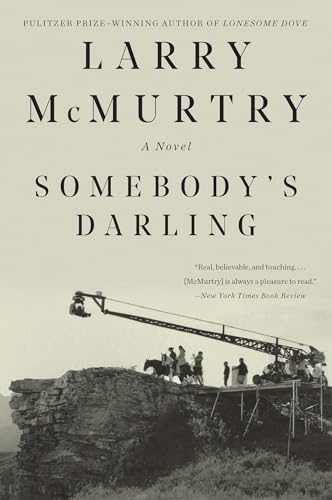


Publication Order of Desert Rose Books


Publication Order of Lonesome Dove Books


Publication Order of Berrybender Narratives Books


Publication Order of Standalone Books


Publication Order of Short Story Collections Books

Publication Order of Non-Fiction Books
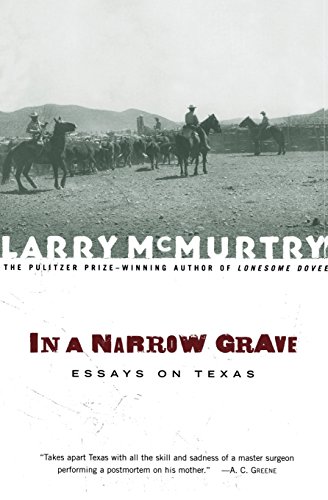


Publication Order of Penguin Lives Books









About Larry McMurtry
Larry McMurtry was an American novelist, essayist, screenwriter, and bookseller whose work transformed the mythology of the American West by concentrating on the people left behind when its heroic legends collided with ordinary life. Best known for the Pulitzer Prize-winning Lonesome Dove, he wrote more than thirty novels alongside memoirs, essays, biographies, and screenplays. His fiction ranges from nineteenth-century cattle drives and frontier communities to contemporary Texas towns and urban relationships, but throughout his career he remained fascinated by loneliness, friendship, displacement, aging, and the disappearance of ways of life people once assumed would endure.
McMurtry was born in Wichita Falls, Texas, in 1936 and grew up on his family’s cattle ranch near Archer City. Unlike the romantic Western landscape celebrated in popular culture, ranch life gave him firsthand knowledge of isolation, physical work, harsh weather, and communities already undergoing enormous change. That contrast between the legendary West and the less glamorous reality experienced by its inhabitants became fundamental to his fiction.
He studied at North Texas State College and later earned a master’s degree from Rice University. A Wallace Stegner Fellowship at Stanford University brought him into contact with writers including Ken Kesey, while teaching positions and literary work gradually established his career beyond Texas.
His debut novel, Horseman, Pass By, appeared in 1961 and introduced the fictional Texas town of Thalia, modeled partly on Archer City. The novel was adapted into the film Hud, starring Paul Newman. McMurtry returned to Thalia in Leaving Cheyenne and, most famously, The Last Picture Show, his portrait of young people coming of age in a declining small town. The latter became an acclaimed 1971 film directed by Peter Bogdanovich and later developed into a continuing sequence following characters such as Duane Moore across decades.
McMurtry was never solely a Western novelist. Moving On and All My Friends Are Going to Be Strangers explore contemporary relationships and literary ambition, while Terms of Endearment follows the difficult but deeply connected lives of Aurora Greenway and her daughter Emma. Its film adaptation won the Academy Award for Best Picture in 1984.
His defining achievement, however, was Lonesome Dove. Published in 1985, the novel follows former Texas Rangers Augustus McCrae and Woodrow Call on an immense cattle drive from Texas toward Montana. McMurtry used the familiar machinery of the Western—cowboys, Indians, outlaws, open country, and frontier settlement—to dismantle romantic assumptions about it. Friendship, death, failed love, exhaustion, violence, and arbitrary misfortune matter as much as adventure. The novel won the 1986 Pulitzer Prize for Fiction and became the foundation of a larger Lonesome Dove saga that McMurtry expanded through sequels and prequels.
Later fiction included the four-volume Berrybender Narratives, another sprawling treatment of the nineteenth-century West, this time following an eccentric English aristocratic family traveling through America.
McMurtry was also a lifelong antiquarian bookseller. He operated Booked Up in Archer City and accumulated an enormous inventory of used and rare books, helping turn his small hometown into an unlikely destination for collectors.
His screenwriting career reached its highest recognition with Brokeback Mountain, adapted with Diana Ossana from Annie Proulx’s story. Their screenplay won the Academy Award in 2006. McMurtry died in 2021 at the age of eighty-four. His enormous bibliography remains unified by a skeptical affection for the West: he understood its legends, but his greatest interest was always in the complicated, vulnerable people living behind them.