
Below is the complete list of Curtis Sittenfeld books in order. For each series, the chronological reading order is the same as the order of publication.
Publication Order of Standalone Books



Publication Order of Short Stories/Novellas Books



Publication Order of Short Story Collections Books


Publication Order of Austen Project Books


Publication Order of Currency Books

About Curtis Sittenfeld
Curtis Sittenfeld is an American novelist and short-story writer known for fiction that examines class, ambition, romance, political identity, social anxiety, and the gap between how people understand themselves and how others see them. Her seven novels range from boarding-school coming-of-age fiction and family drama to speculative political history and contemporary romance, while her short stories often find tension in friendships, marriages, professional rivalries, and seemingly minor social encounters. She is a graduate of Stanford University and the Iowa Writers’ Workshop, and her work has been translated into thirty languages.
Her breakthrough came with Prep in 2005. The novel follows Lee Fiora, an observant teenager from Indiana who enters the elite Ault School in Massachusetts and becomes acutely conscious of wealth, popularity, class codes, friendship, and her own position within the institution. Rather than presenting boarding school as an uncomplicated world of privilege, Sittenfeld concentrates on Lee’s tendency to scrutinize herself and everyone around her, establishing the psychologically precise first-person perspective that became one of her strengths.
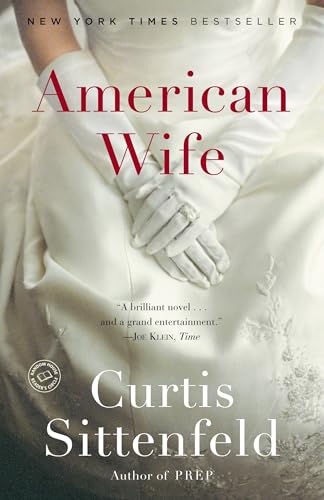
The Man of My Dreams continued her interest in the private assumptions women bring to relationships, while American Wife significantly expanded her audience. The latter creates the fictional Alice Blackwell, a First Lady whose life was inspired in part by Laura Bush, using a recognizable political framework to explore marriage, compromise, privacy, and what it means to love someone whose public identity becomes inseparable from political power.
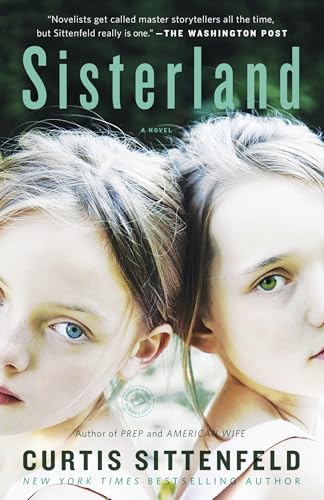
Sittenfeld changed direction again with Sisterland, centered on identical twin sisters whose psychic abilities shape their radically different approaches to adulthood. The supernatural premise is less important than the emotional relationship between the sisters and their conflicting attitudes toward family, identity, and the unusual inheritance they share.
Her contribution to the multi-author Austen Project, Eligible, relocates Jane Austen’s Pride and Prejudice to modern Cincinnati. Liz Bennet becomes a magazine writer, Jane approaches forty, and reality television enters the marriage market through Chip Bingley. The novel preserves Austen’s interest in class, family, attraction, and mistaken judgments while translating those pressures into contemporary American culture.
Sittenfeld returned to political counterfactual fiction with Rodham, imagining how Hillary Rodham’s life and career might have unfolded had she chosen not to marry Bill Clinton. Rather than merely rewriting election history, the novel considers ambition, gender, sexuality, public scrutiny, and the different judgments applied to women pursuing political power.
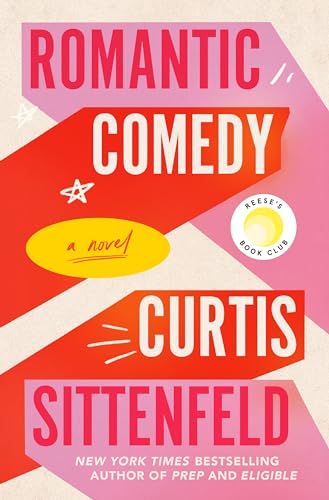
Romantic Comedy moves behind the scenes of a fictional late-night sketch show, where comedy writer Sally Milz becomes attracted to musician Noah Brewster. The romance allows Sittenfeld to examine a persistent cultural double standard: ordinary-looking famous men routinely date glamorous women, while the reverse pairing is treated as improbable.
Short fiction forms another substantial part of her work. You Think It, I’ll Say It appeared in 2018, followed by Show Don’t Tell, her second collection, in 2025. The latter explores marriage, friendship, fame, middle age, and artistic ambition and notably revisits Lee Fiora from Prep decades after her school years.
Across these very different premises, Sittenfeld repeatedly returns to people who misread themselves while reading everyone else with great intensity. Political celebrities, teenagers, spouses, writers, sisters, and romantic partners become subjects for the same sharp social observation, making her bibliography less defined by genre than by an enduring curiosity about status, intimacy, self-consciousness, and the stories people construct to explain their own choices.